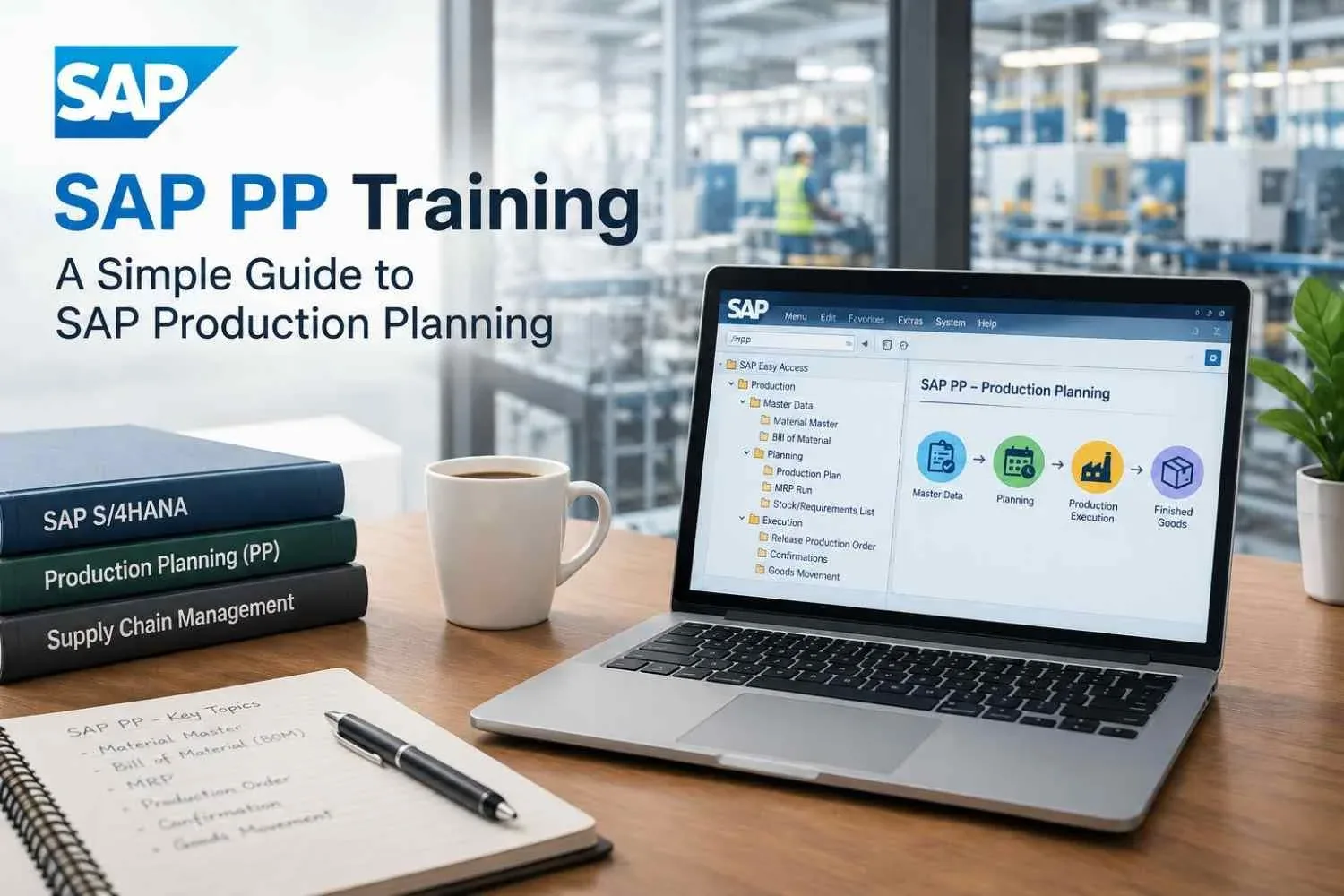
SAP PP Training helps learners understand how production planning and manufacturing processes work in an SAP environment.
SAP PP stands for SAP Production Planning. It is used to support different production-related activities, such as planning materials, organizing production operations, managing resources, and monitoring production orders.
For example, if a company plans to manufacture 1,000 bicycles, it needs to know what materials are required, how the bicycles will be produced, and which resources are needed. SAP PP helps manage and connect these production planning activities.
What Is SAP PP?
SAP PP, or SAP Production Planning, is an SAP functional area related to production and manufacturing processes.
It helps businesses plan what needs to be produced and organize the activities required to complete the production process.
For example, before producing a product, a company may need to check the required materials, define the production steps, and plan the resources needed. These activities are part of the production planning process.
Material Master
The Material Master contains important information about materials used in a business.
For example, a company can maintain information about raw materials, semi-finished products, and finished goods. This information supports different SAP manufacturing processes.
Bill of Materials (BOM)
A Bill of Materials, commonly called a BOM, lists the components required to produce a finished product.
For example, a bicycle may require a frame, wheels, brakes, a chain, and a seat. These components can be organized as part of the product's Bill of Materials.
Work Centers
Work centers represent the locations, machines, or resources where production activities take place.
For example, a manufacturing company may use different work centers for cutting, assembling, painting, and packaging products.
Routing
Routing defines the sequence of operations required to manufacture a product.
For example, a product may move through cutting, assembly, quality inspection, and packaging in a specific order.
Material Requirements Planning (MRP)
Material Requirements Planning, or MRP, helps businesses plan the materials required for production.
For example, if a company receives an order to manufacture 500 products, MRP can help identify the materials needed to support that production requirement.
Production Orders
A production order is used to organize and manage the production of a specific quantity of a product.
For example, a company may create a production order to manufacture 200 units and use it to manage the related production activities.
How Does SAP PP Work?
Different SAP PP concepts work together during the production planning process.
For example, imagine a company wants to manufacture 100 bicycles:
1. Material planning: The company identifies the materials required, including frames, wheels, chains, and seats.
2. Bill of Materials: The BOM shows the components needed to manufacture each bicycle.
3. Material Requirements Planning: MRP helps plan the required materials based on production needs.
4. Work centers: The company identifies where activities such as assembly and painting will take place.
5. Routing: The production steps are organized in the correct sequence.
6. Production orders: A production order is created to manage the manufacturing process.
This shows how SAP Production Planning, material planning, manufacturing processes, and production orders can work together.
Why Is SAP PP Training Important
SAP PP Training helps learners understand how production and manufacturing activities are connected within an SAP system.
It can help build knowledge in areas such as:
* SAP Production Planning
* Manufacturing processes
* Production planning process
* Material planning
* Bill of Materials (BOM)
* Work centers
* Routing
* Material Requirements Planning (MRP)
* Production orders
* Capacity planning
These concepts are useful for understanding how businesses plan and manage production activities.
Who Can Learn SAP PP?
An SAP PP course can be useful for different types of learners.
Freshers and Graduates
Freshers who are interested in SAP can learn the basics of SAP PP and understand how production planning and manufacturing processes work.
For example, a graduate with no previous SAP experience can start by learning concepts such as BOM, MRP, routing, and production orders.
Manufacturing and Production Professionals
Professionals working in production, manufacturing, planning, or operations can use SAP PP Training to understand how their business processes connect with SAP.
For example, a production planner may already understand manufacturing operations and can learn how similar processes are managed within an SAP environment.
SAP Aspirants
People interested in becoming familiar with SAP functional modules can explore SAP PP if they are interested in production and manufacturing.
For example, learners who prefer business and process-oriented SAP concepts may find SAP Production Planning relevant to their interests.
Important SAP PP Training Topics
A well-structured SAP PP Training course may cover topics such as:
* Introduction to SAP PP
* SAP Production Planning process
* Material Master
* Bill of Materials (BOM)
* Work Centers
* Routing
* Demand Management
* Material Requirements Planning (MRP)
* Production Orders
* Capacity Planning
* Production execution
Together, these topics help learners understand how a product moves from planning and material requirements to production and completion.
Benefits of Learning SAP PP
Learning SAP PP can help you develop a better understanding of production planning and SAP manufacturing processes.
Understand Production Planning
You can learn how businesses plan the production of goods.
For example, instead of simply knowing that a product needs to be manufactured, you can understand the steps involved in planning materials, resources, and production activities.
Learn Manufacturing Processes
SAP PP helps connect different manufacturing processes.
For example, material planning, routing, work centers, and production orders are connected parts of the overall production process.
Build SAP Functional Knowledge
SAP PP is useful for learning process-based SAP concepts.
For example, understanding how BOM, MRP, and production orders work can help you build foundational SAP functional knowledge.
Understand Material Planning
Material planning is an important part of production.
For example, before producing 1,000 units of a product, a business needs to understand what materials and quantities may be required.
How to Choose an SAP PP Training Course
Before selecting an SAP PP Training program, consider the following factors.
Course Content
Check whether the course covers the main SAP PP concepts.
For example, the training should help you understand topics such as Material Master, BOM, work centers, routing, MRP, and production orders.
Practical Learning
Look for training that connects SAP concepts with business scenarios.
For example, learning how a product moves from material planning to a production order can make the concepts easier to understand.
Trainer Knowledge
A trainer with a good understanding of SAP and manufacturing processes can explain not only the steps but also why each process is important.
For example, understanding why a Bill of Materials is created can help learners better understand its role in production planning.
Learning Support
Consider whether the course provides suitable study materials and opportunities to practice.
For example, practical exercises based on production planning scenarios can help learners understand how different SAP PP concepts work together.
Frequently Asked Questions About SAP PP Training
What is SAP PP Training?
SAP PP Training teaches learners about SAP Production Planning and production-related processes. Common topics include Material Master, Bill of Materials, work centers, routing, MRP, and production orders.
What does SAP PP stand for?
SAP PP stands for SAP Production Planning.
What is MRP in SAP PP?
MRP stands for Material Requirements Planning. It helps plan material requirements based on production and planning needs.
What is a Bill of Materials in SAP PP?
A Bill of Materials (BOM) is a list of components required to produce a finished product. For example, the BOM for a bicycle may include a frame, wheels, brakes, and a chain.
What are work centers in SAP PP?
Work centers represent the locations, machines, or resources where production activities are performed. For example, separate work centers may be used for assembly, painting, and packaging.
Who can learn SAP PP?
Freshers, graduates, SAP aspirants, and professionals interested in production planning, manufacturing, operations, or related business processes can learn SAP PP concepts.
Is SAP PP related to manufacturing?
Yes. SAP PP is closely related to production planning and manufacturing processes, including material planning, production activities, and production orders.
Conclusion
SAP PP Training is a useful learning option for anyone who wants to understand SAP Production Planning and its role in manufacturing processes.By learning topics such as Material Master, Bill of Materials, work centers, routing, Material Requirements Planning (MRP), and production orders, you can understand how different parts of the production planning process are connected.Whether you are a fresher, manufacturing professional, or SAP aspirant, learning SAP PP can help you build a strong foundation in production planning, material management concepts, and SAP functional processes.